
wooden dissected maps puzzle heritage provides curious puzzle lovers with a thoughtful, engaging window into why jigsaw puzzle remains an essential part of daily life across the globe. Whether you are solving during a quiet morning commute, taking an intentional mental pause during a busy afternoon, or relaxing at home in the evening, a single puzzle session offers a pocket of clean deductive clarity. Here on Daily Jigsaw Puzzle, our mission is to connect players with the stories, structural rules, and practical problem solving habits that make every round deeply rewarding.
You can dive into a fresh, responsive board right now on the Daily Jigsaw Puzzle playable main page. If you enjoy exploring a broader variety of classic daily challenges across different genres, be sure to visit Easy Daily Puzzle or browse the full collection of jigsaw puzzle puzzles on Easy Daily Puzzle.
wooden dissected maps puzzle heritage: the story and strategic heritage of jigsaw puzzle
The roots of the modern jigsaw puzzle lie in eighteenth-century London cartography, where engraver John Spilsbury pioneered educational dissected maps. Around 1760, Spilsbury mounted finely engraved hand-colored maps of Europe, Asia, and England onto sturdy cedar and mahogany boards. Using a fine hand-held marquetry saw, he carefully traced national borders and county boundaries, cutting the maps into loose wooden pieces. Commissioned by aristocratic parents and royal tutors to teach geography to young nobility, these tactile cutouts quickly sparked a broader commercial pastime. Over the following century, steam fretsaws and die-cut cardboard allowed the craft to evolve into the interlocking family puzzles we cherish today.
Understanding the principles behind wooden dissected maps puzzle heritage enriches how we appreciate these timeless games on modern digital screens. What began as handcrafted pastimes on paper, wooden boards, or parlor card tables has successfully adapted across generations while preserving its core appeal. Every move, deduction, or tactical pause you make today connects back to that rich legacy of patient problem solving. When players recognize the origins and milestones of their favorite pastimes, daily play feels less like routine clicking and more like participating in a living global tradition.
Historical records and trusted sources behind wooden dissected maps puzzle heritage
Separating verified puzzle history from casual lore requires consulting reliable archival and rule-keeping organizations. For readers interested in examining primary historical sources, international tournament records, or technical analyses, trusted publications such as World Jigsaw Puzzle Championship rules and The Strong Museum of Play on early jigsaw puzzles provide deep, factual documentation. These authoritative sources highlight the inventors, mathematicians, and dedicated communities who have nurtured these games through the decades. Whether you are researching scoring formulas, historical patent archives, or competitive rulebooks, solid evidence reminds us that thoughtful design endures.
How wooden dissected maps puzzle heritage guides player decisions in real games
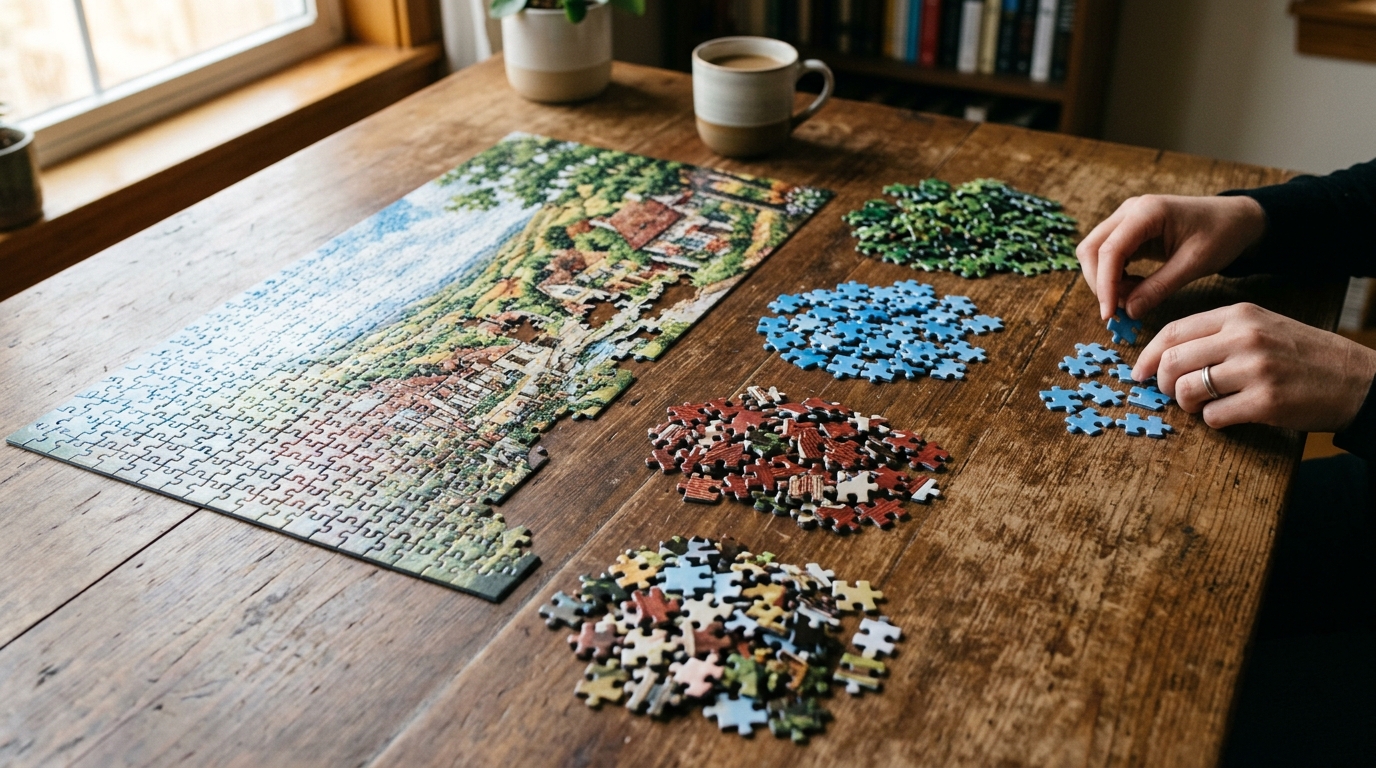
Picture a workspace covered in hundreds of loose pieces, with wide expanses of similar blue skies, water, or dense foliage. The classic beginner mistake is forcing random border pieces together under dim room lighting, creating false fits. Applying wooden dissected maps puzzle heritage encourages you to group high-contrast visual clusters first, such as vibrant textures, text signs, or sharp architectural lines. Assembling these self-contained islands in the middle of your board provides solid, undeniable anchors that guide the outer frame.
Visual patience always defeats hasty force. When you learn to read subtle shifts in color gradient, tab geometry, and line direction, assembling a scattered picture feels like effortless discovery. Each completed cluster reduces the remaining clutter on the table, giving you clearer sightlines and renewed momentum for the subtler background tones.
Essential player habits connected to wooden dissected maps puzzle heritage
- Sort pieces by dominant color, texture, and distinctive patterns before rushing the border.
- Construct independent color islands and link them together as natural bridges appear.
- Examine tab geometry and line direction closely rather than forcing uncertain fits.
- Take short visual breaks when similar hues begin to blur together under room lighting.
Why clean visual design elevates wooden dissected maps puzzle heritage
A clean visual presentation makes all the difference when enjoying jigsaw puzzle online. The featured illustration accompanying this article is chosen to highlight the focused atmosphere of play, free from distracting clutter or confusing brand marks. Having an accurate visual reference paired with descriptive alt text celebrating wooden dissected maps puzzle heritage ensures that readers can immediately grasp the game state and follow along comfortably. Whether on desktop monitors or mobile screens, crisp contrast and uncluttered design help keep your attention centered on the puzzle itself.
Taking your next step with wooden dissected maps puzzle heritage
The most rewarding way to experience the benefits of wooden dissected maps puzzle heritage is to test these insights in an actual round today. Head over to Daily Jigsaw Puzzle to enjoy a relaxing session with fresh perspective, focusing on deliberate choices rather than rushing the clock. Whenever you feel like broadening your horizons with crosswords, jigsaws, or classic card games, explore the Easy Daily Puzzle game library for endless daily variety. Great puzzle solving is not about chasing frantic records; it is about the quiet satisfaction of bringing order to a scattered board, one thoughtful move at a time.