
jigsaw puzzle stress relief is useful only if it changes the next move. A good puzzle post should feel like practical help from another player, not a lecture from far away.
On Daily Jigsaw Puzzle, that means keeping the advice close to the game. The reader can play one round here, then use Easy Daily Puzzle when they want a wider shelf of daily puzzle choices.
Start locally with Daily Jigsaw Puzzle main page. If the mood changes after this game, browse more puzzle games on Easy Daily Puzzle is the natural next stop.
jigsaw puzzle stress relief works best as a light routine
A short puzzle routine does not need to feel serious. It needs a clean start, a fair problem, and enough feedback that the player can feel progress.
Jigsaw Puzzle works for that because the rules stay steady while each new grid, picture, clue set, or deal changes the small decisions.
How to practice jigsaw puzzle stress relief without overthinking it
The best practice plan is small. Pick one habit for the next round and watch whether the game becomes easier to read. If it helps, keep it. If it does not, drop it and try another.
This keeps jigsaw puzzle from turning into homework. The goal is not to master every trick today. The goal is to make fewer messy moves than last time.
- Sort colors and textures before forcing exact placement.
- Use edges when they are obvious, but do not let edge work trap the whole session.
- Build small islands of certainty instead of chasing one perfect piece.
- Compare shape and line direction before testing random fits.
- Take a short pause when similar colors start looking the same.
A real-game way to use jigsaw puzzle stress relief
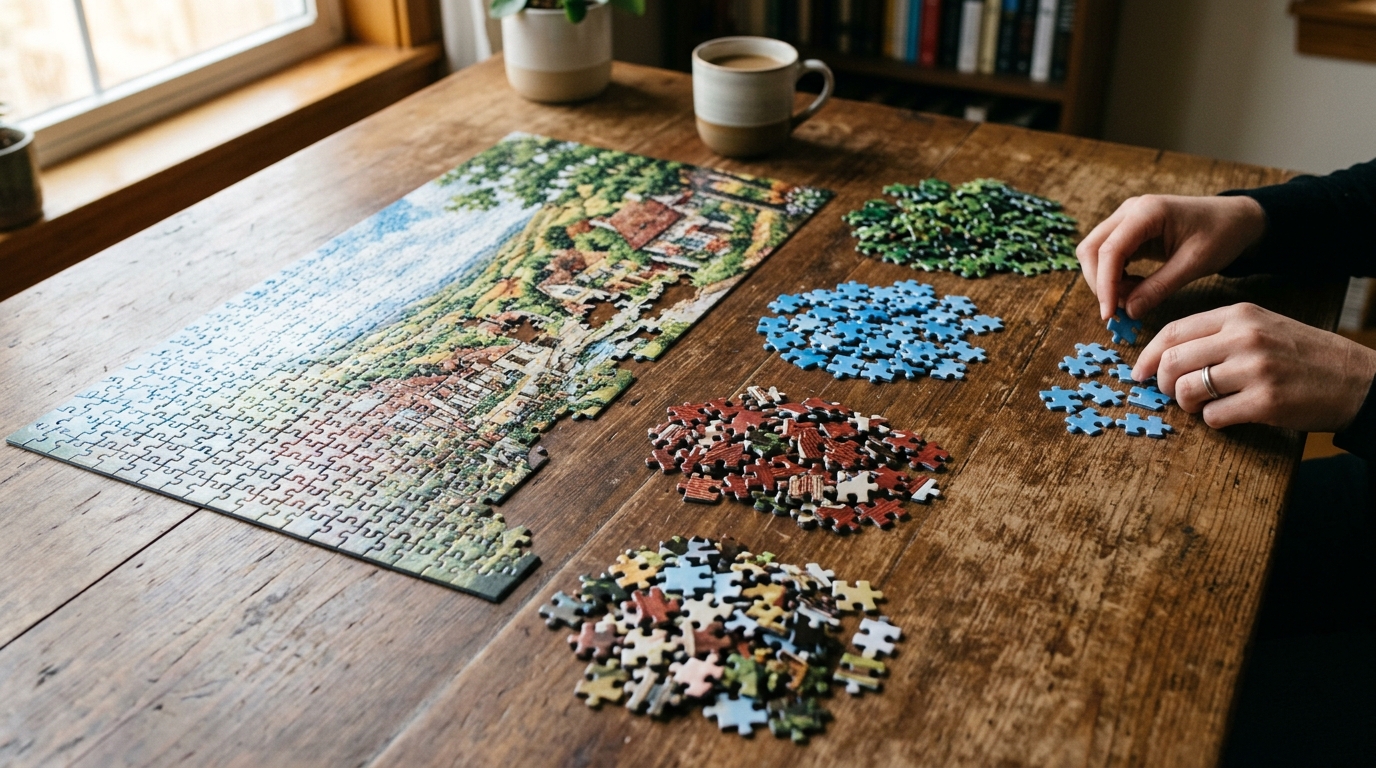
A jigsaw puzzle can look chaotic at first because every piece is asking for attention at once. The fastest players are rarely frantic. They make the table smaller by grouping obvious edges, strong colors, faces, sky, water, shadow, or repeated texture.
That is the practical side of jigsaw puzzle stress relief. The image becomes easier when the player stops trying to see the whole picture and starts building parts that already make sense.
A short drill for jigsaw puzzle stress relief
Try one puzzle where the first move is sorting, not placing. Make small groups for edge pieces, strong color blocks, repeated textures, and odd shapes. That makes jigsaw puzzle stress relief visible before the build begins.
Then build two or three small islands away from the border. Online jigsaw play rewards this because the screen can make similar pieces feel closer than they are. A few reliable islands keep the picture honest.
What players often miss about jigsaw puzzle stress relief
The missed part is usually timing. Many moves are correct in isolation but weak in order. They spend space, hide information, or solve the wrong part of the board first.
That is why slow-living columnist advice should sound plain. Look first. Name what the move opens. Then decide whether it is still worth making.
Why online play changes jigsaw puzzle stress relief
Online jigsaw play removes the table, but it adds useful comfort. Pieces do not get lost, the picture can be restarted easily, and a short session still gives a visible sense of progress. That makes jigsaw puzzle stress relief easier to practice in small breaks.
The tradeoff is that scale can be harder to judge on a screen. If two pieces almost fit, look at line direction and texture before trusting shape alone.
A fair test is to play two rounds with one rule in mind. In the first round, play normally and notice where the board starts to feel crowded or unclear. In the second round, use jigsaw puzzle stress relief as the filter for every early choice. The difference may be small, but it is usually visible: fewer forced repairs, fewer blind guesses, and a calmer finish. That is enough. Casual puzzle improvement should feel like the same game with better habits, not like a new chore. If the habit feels useful after two rounds, keep it for the week and ignore everything else until it feels automatic.
jigsaw puzzle stress relief as a reader-friendly next step
A useful article should not end by floating away into general claims. The reader needs somewhere to go. They can try another round on Daily Jigsaw Puzzle, or shift to the Easy Daily Puzzle game library when they want a different puzzle pace.
For background beyond the game page, The Strong Museum on jigsaw puzzles and World Jigsaw Puzzle Federation are worth opening. They give the game context without making the article feel like a citation dump.
What to remember about jigsaw puzzle stress relief
The habit to remember is simple: do not reward motion by itself. Reward moves that reveal, confirm, open, or simplify. That one filter helps across grids, cards, clues, and pieces.
That is the quiet value of jigsaw puzzle stress relief. The game still feels casual, but the next round has a little more shape. A player leaves with a cleaner board, or at least a clearer reason to try again.